
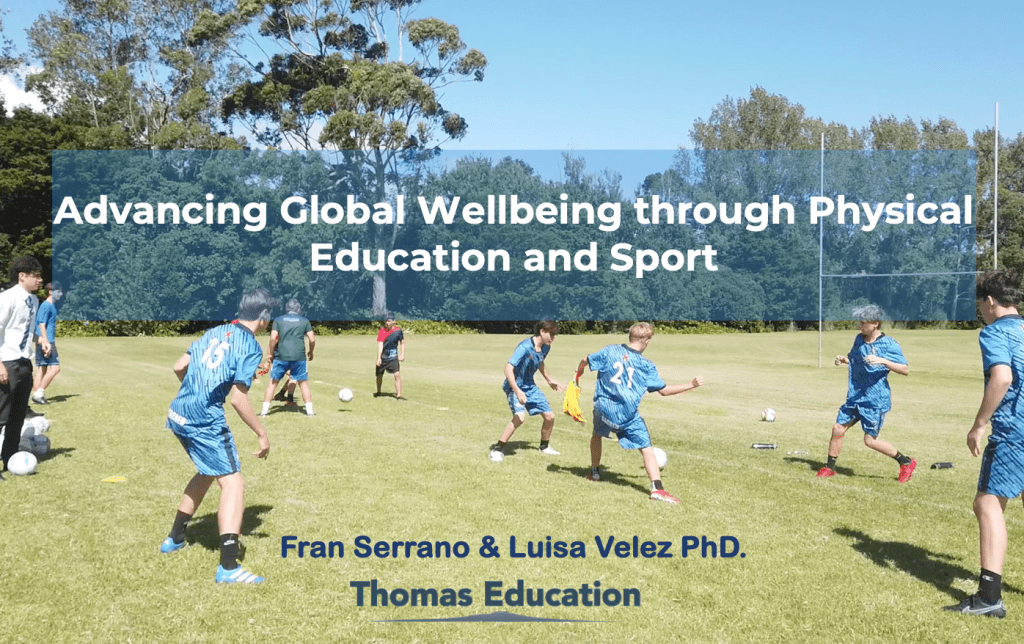
Advancing Global Wellbeing through PE and Sport
The landscape of global health is shifting, and with it, the recognition that physical activity is not just a leisure activity, but a fundamental pillar of human flourishing. Thomas Education researchers Francisco Serrano Romero and Luisa Velez, PhD, are at the helm of an ambitious new book project titled Advancing Global Wellbeing through Physical Education and Sport. This comprehensive volume aims to dismantle the silos between education, public health, and social equity to explore how movement can address some of the world’s most pressing challenges.
A Holistic Vision for Movement
Unlike existing literature that often focuses on narrow niches such as curriculum design or conflict resolution, Serrano and Velez are championing a holistic approach. Their project defines “sport” broadly, encompassing everything from school-based physical education (PE) and community recreation to high-performance athletics.
By integrating perspectives from sociology, sports science, and public health, the book serves as a multidisciplinary catalyst for global change. It seeks to provide a singular resource that connects physical activity to the United Nations Sustainable Development Goals, emphasizing that movement is essential for both individual health and collective social progress.
Exploring the Six Pillars of Wellbeing
The proposed book is structured into six distinct parts, each designed to tackle a critical facet of the modern sporting world:
- Diversity and Inclusion: Moving beyond “one size fits all” models to create equitable environments for LGBTQ+ individuals, refugees, and those with disabilities.
- 21st-Century Curriculum: Modernizing PE through technology (like wearables and VR) and fostering “Physical Literacy” to ensure lifelong participation.
- Youth Development: Examining how sport builds character, resilience, and mental health while providing alternatives to youth violence.
- Indigenous and Minority Education: With the project being developed in New Zealand, there is a vital emphasis on indigenous knowledge and culturally relevant physical activity programs.
- Health Outcomes: Addressing the global sedentary crisis and the role of PE in preventing chronic diseases like diabetes and obesity.
- Innovation and Future Trends: A visionary look at emerging sports analytics, novel coaching methodologies, and the future of sports management.
Why This Matters Now
The motivation for this work grew from the International Society for Comparative Physical Education and Sport (ISCPES). As the world faces rising rates of lifestyle diseases and deepening social inequalities, the need for an integrated, evidence based roadmap has never been greater.
Serrano and Velez have designed this manuscript to be accessible to a wide-ranging audience, including PE teachers, policymakers and leaders focused on social inclusion. By bringing together scholars from diverse backgrounds and countries, the editors are ensuring that the knowledge shared is truly global in scope.
Looking Ahead
The project is currently underway with contributors from across the world drafting their chapters, with the manuscript expected to reach completion by the end of 2026. Once published, it will stand as a 125,000 word testament to the transformative power of sport, not just as a game, but as a tool for a healthier, more inclusive world.
The landscape of global health is shifting, and with it, the recognition that physical activity is not just a leisure activity, but a fundamental pillar of human flourishing. Thomas Education researchers Francisco Serrano Romero and Luisa Velez, PhD, are at the helm of an ambitious new book project titled Advancing Global Wellbeing through Physical Education and Sport. This comprehensive volume aims to dismantle the silos between education, public health, and social equity to explore how movement can address some of the world’s most pressing challenges.
 Thomas Education NZ